- RESEARCH HIGHLIGHT
- 16 April 2026
Most of the individuals in a seventeenth-century-Switzerland burial site had performed strenuous manual labour and died before the age of 20.

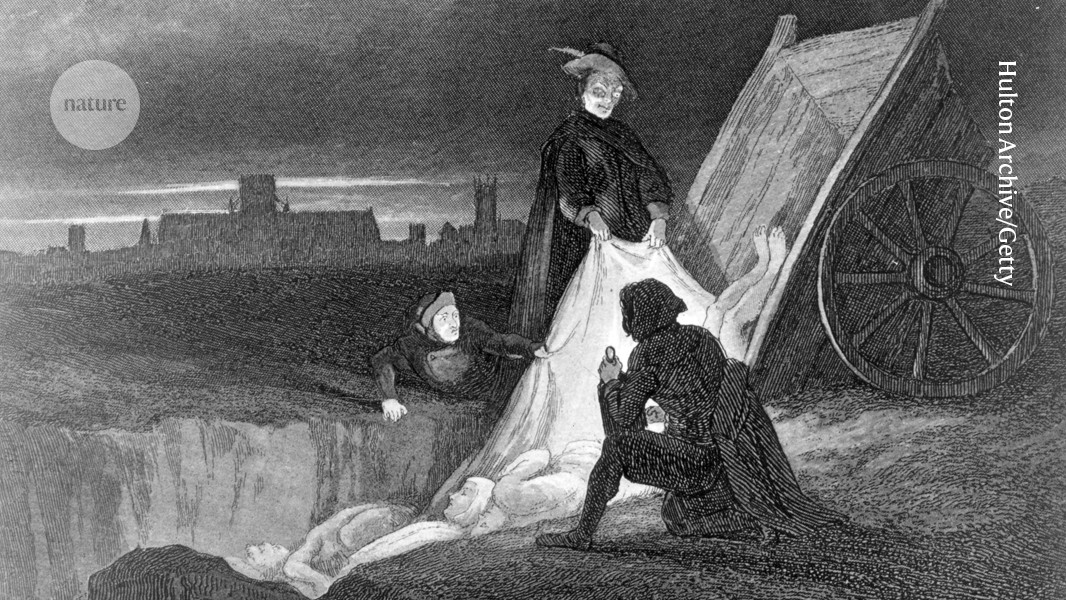
Bodies being interred during the Great Plague of London of 1665, in a mid-1800s interpretation by artist John Franklin. Credit: Hulton Archive/Getty
A plague outbreak fell hardest on low-income workers who could not afford to stay home even during an epidemic1. The disparities identified in human remains from the last plague outbreak recorded in Switzerland, in 1665–70, echo those seen during the COVID-19 pandemic.
Access options
Access Nature and 54 other Nature Portfolio journals
Get Nature+, our best-value online-access subscription
$32.99 / 30 days
cancel any time
Subscribe to this journal
Receive 51 print issues and online access
$199.00 per year
only $3.90 per issue
Rent or buy this article
Prices vary by article type
from$1.95
to$39.95
Prices may be subject to local taxes which are calculated during checkout
Additional access options:
doi: https://doi.org/10.1038/d41586-026-01210-7