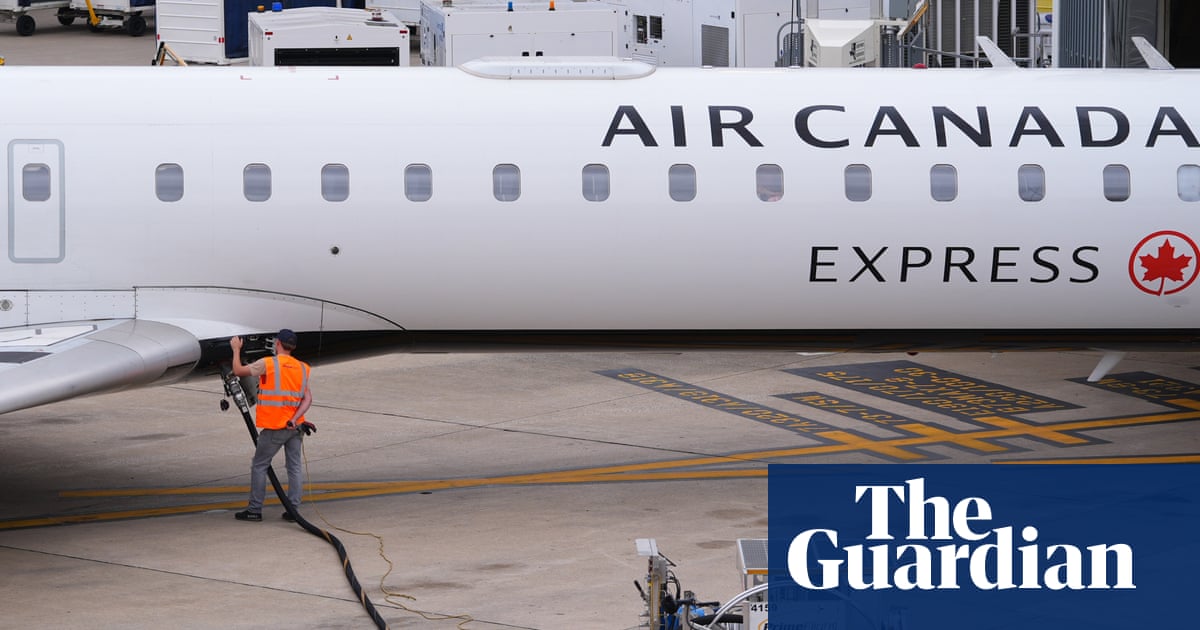
Air Canada has announced a temporary suspension of flights from Toronto and Montreal to New York’s John F Kennedy airport, citing rising fuel prices.
The move comes amid growing concerns that airlines worldwide may scale back services as aviation fuel costs climb in the wake of the US and Israel’s ongoing war with Iran, which entered a fragile ceasefire earlier in April. Although Iran announced on Friday that the strait of Hormuz had reopened, helping ease oil prices, fuel costs remain significantly elevated after weeks of disruption.
Separately on Friday, Spirit Airlines has asked the US federal government for hundreds of millions of dollars in emergency funding to offset a surge in fuel costs, the Air Current industry website reported, citing unnamed sources. Spirit did not immediately return a request for comment.
“Jet fuel prices have doubled since the start of the Iran conflict, affecting some lower profitability routes and flights which now are no longer economically feasible,” Air Canada said in a statement on Friday. “Schedule adjustments including some frequency reductions are being made in response.”
The airline said flights from two of Canada’s major cities will be paused starting 1 June, with service expected to resume on 25 October.
The affected routes include one flight from Montreal and three from Toronto, the Canadian Broadcasting Corporation (CBC) reported, citing an Air Canada spokesperson.
“Any affected customers will be contacted with alternate travel options,” an airline spokesperson said, referring to New York’s LaGuardia airport and New Jersey’s Newark Liberty international airport. The spokesperson said Air Canada would continue flying to the LaGuardia and Newark airports “34 times daily from six cities across Canada”.
Other temporary suspensions from the airline include a Salt Lake City-Toronto route, which will be halted 30 June onwards with plans to resume in 2027, as well as a delay to the launch of a service from Guadalajara, Mexico, to Montreal.
The airline said it anticipated the changes would affect 1% of its overall passenger-carrying capacity.
Since the US and Israel’s war with Iran began in late February, airlines have warned that rising fuel costs were beginning to weigh on bookings. The British budget airline easyJet recently said it expects a pre-tax loss of £540m-£560m for the six-month period ending in March.
Australia’s flagship carrier Qantas and Virgin Australia, meanwhile, have announced ticket price increases and reductions in flight frequency.
The International Energy Agency (IEA) also warned recently that Europe has only six weeks of jet fuel reserves remaining before shortages could hit. Fatih Birol, the executive director of the IEA, attributed that to ongoing Middle East instability, adding that flight cancellations would “soon” follow if oil supplies from the region are not restored in the coming weeks.